
Nine Men Who Left Chatswood Oval for Anzac Cove
By Paul Stephenson
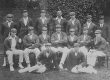
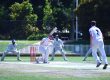
There is a photograph that exists only in the imagination. Nine men in the early 1900’s in white flannels, squinting into a Sydney summer sun at Chatswood Oval. Some are bowlers, some batsmen, one a doctor, one a bank clerk, one a grazier who can break in a brumby and ride all day. They are cricketers. They are mates. On Saturday afternoons they argue about field placements and grumble about dropped catches, and when the game is done, they share a beer and talk about next week. Their lives are ordinary in the very best sense of the word; rooted, comfortable, full of small pleasures and easy friendships.
And then the world ends.
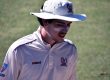
Not all at once. It ends in the way that worlds always end for young men in wartime; first with excitement, then with confusion, then with a terror so complete it can never quite be spoken of afterwards. This Anzac Day, we remember nine Gordon cricketers who were there at Gallipoli: Cliff Geddes, Fred Easton, Alan Bruce, Reginald Black, Harold Fry, Dr Clarence Read, Dr Claude Tozer (pictured in feature image), Robert Prior and George Swan. We remember not just what they did, but what it cost them and what it cost the people who loved them and waited for them at home.
The Promise
It is worth pausing on what these men were told before they left.
The recruiting posters of 1914 spoke of adventure, of travel, of duty to God, King and Country. They spoke of mateship and glory, of being part of something historic. The newspapers were full of patriotic fervour. Sporting clubs, including the Gordon District Cricket Club were explicitly encouraged to release their young men to the cause. The club’s own Annual Report of the time noted approvingly that no encouragement had been given to younger players to play cricket “rather than doing their duty for their country.”
And so they went. They went with pride and, in many cases, with genuine excitement. Fred Easton was twenty years old. Robert Prior was twenty-five. Cliff Geddes, at twenty-eight, was among the older ones. They had been told this would be the experience of a lifetime; and in the cruellest possible sense, for some of them, it would be.
What no poster told them; what no one could have told them; was what it sounds like when a man drowns in a boat fifty yards from shore before he ever sets foot on enemy ground. What it smells like when hundreds of bodies lie unburied in the summer heat of No Man’s Land. What it feels like to fire a rifle until the barrel is too hot to hold, and hand it down into the trench below, and pick up another, and keep firing, because stopping means dying.
None of that was in the brochure.
The First to Go
Cliff Geddes was the first Gordon cricketer to enlist; on 19 August 1914, just days after Britain declared war on Germany. A third-grade bowler who had recently taken 54 wickets for the Vets team, he was a bank clerk living in Railway Street, Chatswood. He was also, it would turn out, a writer of rare and vivid honesty. His diary would become one of the most vivid documents to come out of the entire war.
Within a week of Cliff signing up, Fred Easton and Alan Bruce had also enlisted. Fred was twenty years old, a clerk from Mowbray Road, Chatswood, who played alongside Cliff in third grade. Alan Bruce was a civil servant from Lindfield who had turned out for the Gordon Vets team. All three sailed on the HMAT Euripides in October 1914, bound first for England, then Egypt and then, though they could not have known it, the cliffs above a small Aegean cove.
Think for a moment about the families they left behind. Parents standing at the wharf, holding smiles they didn’t feel, watching ships disappear out of the harbour. Mothers who had already begun the ritual that would define their days for the next several years: waiting for letters, dreading telegrams. The letters, when they came, were weeks old by the time they arrived, which meant that every piece of reassuring news was already history by the time it was read. I am well. Don’t worry. By the time those words reached Chatswood, the man who wrote them might already be in a hospital ship, or a field tent, or in the ground.
April 25, 1915
When the boats pushed toward the shore in the darkness of the early morning of 25 April 1915, Alan Bruce was among the very first wave of Australians to land. What he found was carnage. An anonymous soldier who came ashore in the same wave recorded what greeted them: the mountainside alive with flame, men falling in the boats before they reached the shore, silent forms scattered across the beach. Seven men killed in Alan’s boat alone before it touched the sand.
Alan survived the landing. So did Cliff and Fred, who came ashore in the second and third waves. By 5 May, only a small stretch of ground had been held. It would become known as Anzac Cove.
Try to imagine what that first day felt like for a young man from Chatswood. Only a few months earlier he was a bank clerk and a cricketer. Now he is lying flat on a strange beach in the dark, bullets whipping overhead, and the men beside him; men he has trained with, eaten with, laughed with; are dying. There was no manual for this. There was no adequate preparation for it. The gap between the life these men had known and the life they were now living was not a gap at all – it was an abyss.
The Night of 19 May
The defining battle of Cliff Geddes’ time at Gallipoli came on the night of 19 May, when 42,000 Turkish troops launched a mass assault on 17,000 Australians and New Zealanders. Cliff recorded what he saw with the precision of a man who understood that someone, someday would need to know:
“Along with others I was ordered to lie on the ground above the trench. When we climbed out a startling sight met our eyes. The darkness of No Man’s Land was lit by the fire of blazing rifles from the grass, and the Turks were within 25 yards of our trenches.
Thus, I was a spectator of the most thrilling game I have ever seen.
The Australians were magnificent. Every man who could was firing across the trench at the line of fire from the dark ground as fast as he could pull the trigger and pull back the bolt to reload. When the rifle got too hot to hold, or jammed, the man below on the floor of the trench handed up his with more cartridges.
I was struck by the magnificent running of an athletic Turk, who ran like a deer for his own trench. Bullets threw up the dirt all around his feet, but on he sped and I really hoped that he might get there as he was such a wonderful runner. Just as he reached his own line and was about to jump into the trench an Australian bullet ended his great effort, and he rolled back down the slope.”
What strikes you about this passage, reading it more than a century later, is how Cliff reaches for the language he knows; the language of sport, of spectacle, of the “thrilling game”; to describe something for which no language really exists. He is a cricketer trying to make sense of a battlefield. The instinct to find familiar frames for the unfamiliar is profoundly human. It is also, in its way, heartbreaking.
Third grader Fred Easton did not survive that night. He was killed during hand-to-hand fighting as Turkish forces infiltrated the 4th Battalion trenches. He had been at Gallipoli for just twenty-five days. He was twenty years old. Somewhere in Mowbray Road, Chatswood, his family would eventually receive a telegram. We do not know how his family reacted when they read it. We can only imagine.
Fred is buried at the 4th Battalion Parade Ground Cemetery, on the road between Wire Gully and Anzac Cove, where he has lain for more than a century.
That same night, further along the cove, a ship called the SS Lutzow waited at anchor for the shelling to die down. On board was Reginald Black, a Lance Corporal with the 6th Light Horse Regiment; son of the Gordon club’s first and longest-serving president, grazier, horseman, described in the Sydney Morning Herald as “a fine rider and a good bushman.” He came ashore on 21 May, stepping onto ground still scattered with the dead of the battle that had just claimed Fred Easton’s life.
The Engineers, the Doctors, and the Stretcher Bearers
As June arrived, more Gordon cricketers found their way to that strip of contested coastline. Harry Fry, an engineer with the NSW Public Works Department, who had taken twenty wickets in five games before enlisting, arrived with the 1st Field Company Engineers. His job was to build and repair the labyrinthine trench system on the Gallipoli hillsides, often under fire, in conditions of staggering heat and the kind of sanitary horror that breeds disease as efficiently as bullets breed death.
Dr Clarence Read, a gynaecologist at Royal North Shore Hospital who had played in the Gordon Veterans team, enlisted at age forty-four and was posted to the 3rd Australian General Hospital on the island of Lemnos; thirty-seven miles across the bay. When the August Offensive began and the wounded flooded in from Lone Pine, Clarence and his colleagues worked without adequate supplies, in tents, with more than 800 patients within days of opening. Of the tens of thousands who passed through Lemnos, only two per cent died. That figure represents an almost superhuman feat of medicine practised under impossible conditions.
Dr. Claude Tozer arrived at Anzac Cove in August, twenty-four years old and newly graduated. Robert Prior, a Second Grade batsman from Artarmon, and neighbour of Charlie Macartney, arrived with the 5th Field Ambulance. On his first night, 307 casualties passed through his aid post between 7pm and 4am: stretcher bearers carrying some patients three miles across broken ground in the dark. And George Swan, a First Grade player who had scored 294 runs for Gordon in the 1911-12 season, arrived in November with the 15th Battalion, a unit that by that point had lost more than half its men.
Each of these men had a family at home reading whatever scraps of news filtered back through the censored press. Parents read between lines written to spare them the worst. The Sydney Morning Herald carried casualty lists. Every morning, people in the suburbs of Sydney opened their newspapers with a specific, private dread.
The Evacuation
By December 1915, the Allied commanders had finally accepted what their soldiers had known for months: the campaign could not be won. The evacuation was ordered.
Robert Prior was one of thirty-six volunteers from the 5th Field Ambulance who stayed to the very last, ready to assist any final casualties. Reg Black was given command of a machine gun section of thirty-five Light Horsemen whose job was to cover the final retreat, then make a dash themselves. At 2.25am on the last night, the remaining men of the 6th Light Horse left the shores of Gallipoli on the SS Alcha Ora.
As Reg’s boat pushed off and the dark water widened between himself and the beach, he looked back at the pock-marked hillside where 8,000 Australians had died. The Turks, it turned out, had not known they were leaving. They continued to shell the empty positions the following morning; firing at ghosts, at silence, at the absence of the men they had fought for eight months.
The evacuation was the most successful operation of the entire campaign. Which is to say: the most successful thing the Allies did at Gallipoli, other than create a legend, was to leave.
What Came After; And What Never Left
Here is what the posters never showed. Here is what the adventure looked like from the other end.
Fred Easton never came home. Reg Black survived Gallipoli only to be killed in Palestine in August 1917, weeks after earning the Military Cross for an act of extraordinary composure under fire. Alan Bruce: who had been in the very first wave to land on that April morning, died at sea on his way home in September 1918, his body broken by years of wounds, illness and the relentless grind of a war that moved him from unit to unit long after he had nothing left to give. He was buried at sea. His family in Lindfield did not even have the consolation of a funeral.
The six who came home carried the war inside them in ways that rarely showed on the surface but never fully healed. Cliff Geddes was one of the rare ones who could speak about it, who found in words some means of processing what he had seen. He married Elsie, played cricket for Gordon until 1924, and would take his teenage son Geoff to Chatswood Oval after the Second World War to watch the likes of Ginty Lush and Sid Carroll. He seemed, by all accounts, to have found his way back to something like ordinary life.
But in 1947, sitting near the Macartney Scoreboard watching the game he loved on the ground where it had all begun for him thirty-three years earlier, Cliff suffered a stroke. He died a month later.
Harry Fry won two Military Crosses on the Western Front and came home to marry an English woman he’d met near the end of the war. He lived until 1976; long enough to see the world change beyond all recognition, carrying memories that most people could not begin to imagine. Dr. Clarence Read returned quietly to Royal North Shore Hospital. Robert Prior and George Swan came home and tried to rebuild lives interrupted by years of horror. Dr Claude Tozer, who had been severely wounded at Pozières, who had dressed men’s wounds under shellfire at Ypres and had survived everything the war threw at him; was shot dead in Lindfield in December 1920 by a patient who had become obsessed with him. He had scored 491 runs in 4 innings at an average of 122.75 at the start of the 1920-21 season and was selected in an Australian XI to play the touring English team.
We have no record of what nightmares visited these men in the small hours. We have no record of what they couldn’t eat, or couldn’t hear, or couldn’t bear to see, because it reminded them of something they were trying not to remember. In 1915 there was no language for what we now call post-traumatic stress. There was only silence, and the effort of getting on with things, and the hope that the memories would eventually fade. For most of them, they never entirely did.
Why It Still Matters in 2026
It would be comforting to think that the story of the Gordon Nine belongs entirely to history; that the particular combination of jingoism, imperial obligation and catastrophic military miscalculation that sent twenty-year-old Fred Easton to die on a Turkish beach could never be replicated. It would be comforting, but it would not be honest.
Young men and women are still being sent to war. They are still being told stories about duty and necessity that do not fully prepare them for what they will find. Their families are still waiting, still reading between the lines of every social media post they read, and still waking up each morning with a private dread. And those who come home; carrying things inside them that the world around them cannot see and does not always try to understand.
The names change. The geography changes. The weapons change beyond all recognition. What does not change is the unbridgeable gap between the life a young person knows; and the life they are asked to step into when a nation decides that war is necessary. That gap has swallowed generations.
Anzac Day asks us to hold that knowledge to what we know happened, without looking away from it. Not to glorify, not to sentimentalise, but to genuinely confront what was asked of these men, and what it cost them.
The diggers sacrifice
The historian Charles Bean, who walked with the diggers from Gallipoli to the Western Front and never stopped trying to honour what he had witnessed, wrote of their sacrifice: “What these men did, nothing can alter now… It rises, as it will always rise, above the mists of the ages, a monument to great-hearted men; and, for their nation, a possession forever.”
Nine cricketers. Nine ordinary men from the suburbs north of Sydney who played on Saturday afternoons at Chatswood Oval and then, when their country called, shouldered rifles and sailed to the other side of the world. They were not heroes when they left. They became heroes in circumstances no one should ever have to face.
We remember them all this Anzac Day. We remember Fred on the beach. We remember Reg on the last boat. We remember Alan, buried at sea. We remember Cliff, watching that Turkish soldier run, reaching for the only language he had; the language of sport, of contest, of the “thrilling game”; because some experiences are simply beyond words.
And we remember what they were before all of it: nine men in white flannels, squinting into a Sydney summer sun, with nothing more pressing on their minds than the next delivery, the next innings, the next Saturday at Chatswood Oval.
Lest we forget.
Paul Stephenson is the author of “A Cricket Club at War” (The Cricket Publishing Company, 2015), a history of the Gordon District Cricket Club members who served in World War I, and “Service and Sacrifice: The Gordon District Cricket Club in the Second World War” (The Cricket Publishing Company, 2024).